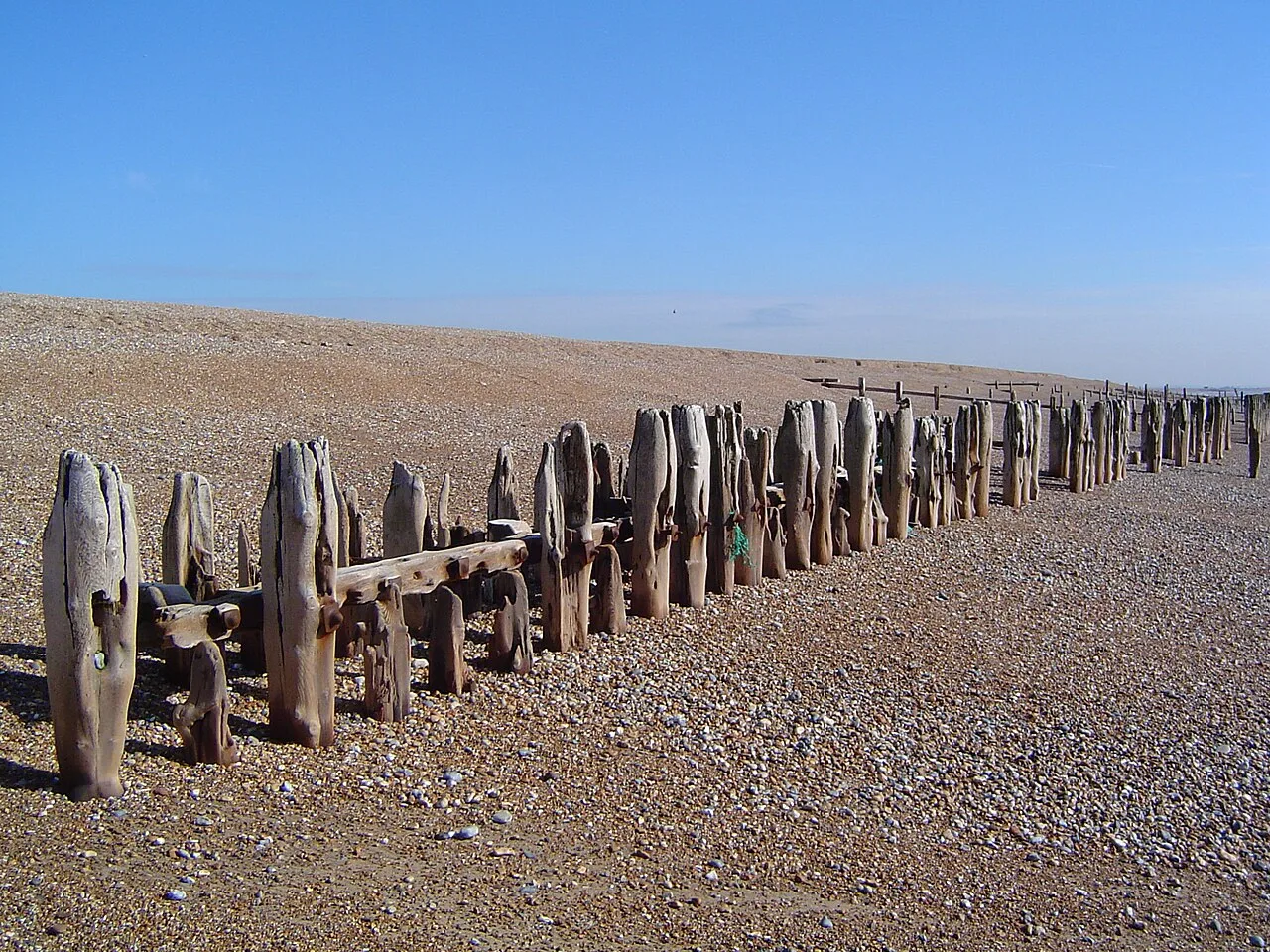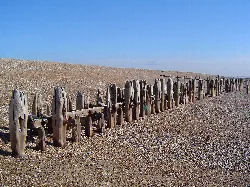
What are the sea defences near Winchelsea?
The sea defences on the South Coast near Winchelsea consist of weathered wooden posts. These structures are designed to protect the coastline from erosion and are a notable feature of the area, reflecting the town's historical struggles against coastal storms and flooding.
Nature
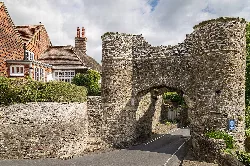
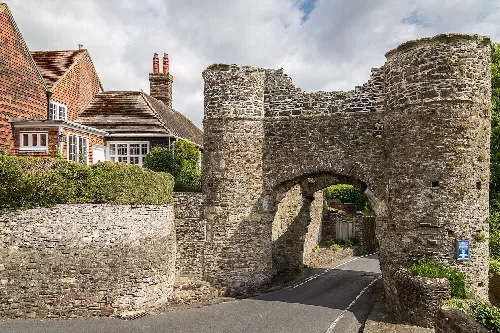
What can you tell me about the city gate in Winchelsea?
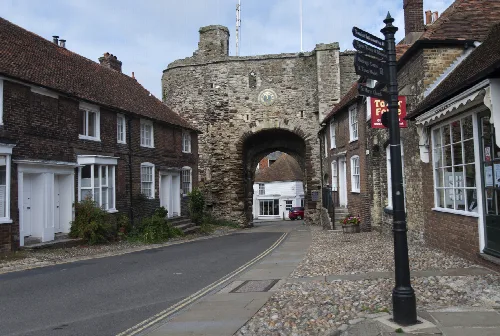
The city gate in Winchelsea is a historic stone archway that marks the entrance to the town. It is an important landmark, showcasing the medieval architecture that characterises Winchelsea and serving as a reminder of the town's rich history dating back to its foundation in 1288.
Sights
Winchelsea city gate
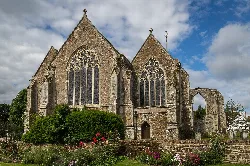
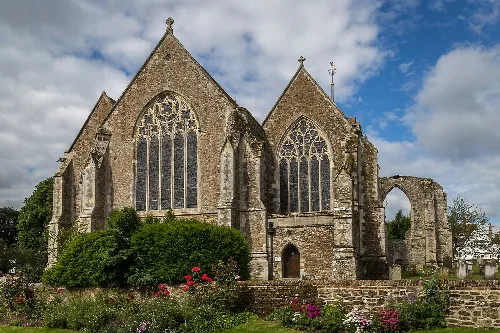
What is the history of the Parish Church of St Thomas the Martyr?
The Parish Church of St Thomas the Martyr in Winchelsea has a rich history, having been established after the flood of 1287. It features Gothic architecture, though only parts of the original structure remain in use today. The church underwent significant restoration in 1850 and houses notable stained glass windows from the 20th century.
History
Parish Church of St Thomas the Martyr
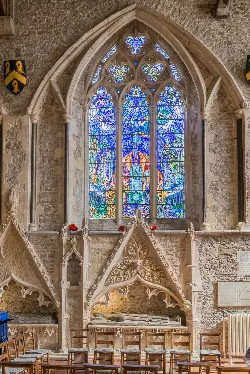
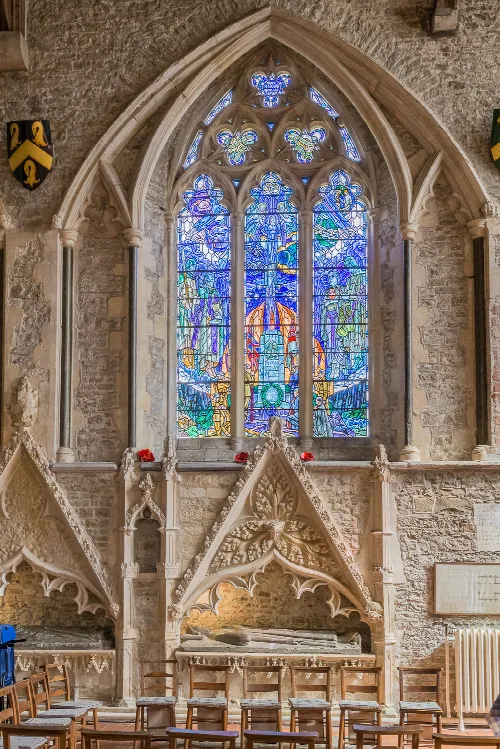
What are the stained glass windows in the church about?
The stained glass windows in the Parish Church of St Thomas the Martyr commemorate the men of the town who served in the First World War. Designed by Douglas Strachan, they depict themes of Land, Air, Fire, and Sea, and are regarded as some of the finest stained glass in Britain from the twentieth century.
Sights
stained glass window
How did Winchelsea's original town come to be lost?
Old Winchelsea was lost to coastal erosion due to severe storms that began in the 1230s. By the late 13th century, repeated flooding and the breaching of the shingle barrier led to the town's relocation to higher ground, resulting in the establishment of New Winchelsea in 1288.
History
What is the significance of the Winchelsea Court Hall?
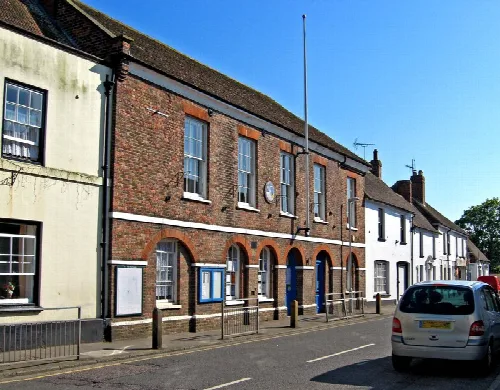
The Winchelsea Court Hall is one of the town's oldest buildings, with its lower floor once serving as a gaol. Today, the first floor functions as a museum, showcasing the history of Winchelsea and its corporation, along with a model of the town, making it a key historical site.
Sights
Winchelsea Court Hall
Are there any notable events or festivals in Winchelsea?
Winchelsea is known for its historical events, including the ancient Winchelsea Streete Game, which originated in 1377 during a French siege. Traditionally played on Boxing Day, this event reflects the town's rich cultural heritage and community spirit.
Festivals & events
What is the population of Winchelsea?
Winchelsea has a small population of around 600 residents. This tight-knit community contributes to the town's charm and character, making it a unique place to live or visit in East Sussex.
Living there
For residents
How did Winchelsea's economy change over time?
Winchelsea's economy flourished in the 13th century, primarily through the wine trade and wool exports. However, its decline began in the late 14th century due to the Black Death and the impracticality of its harbour, leading to a significant decrease in trade and population.
History
For residents
What is the importance of the Royal Military Canal to Winchelsea?
The Royal Military Canal, built in the early 19th century, runs along the eastern side of Winchelsea. It was constructed as a defensive measure against a potential invasion by Napoleon Bonaparte, highlighting the town's historical military significance.
History
For residents