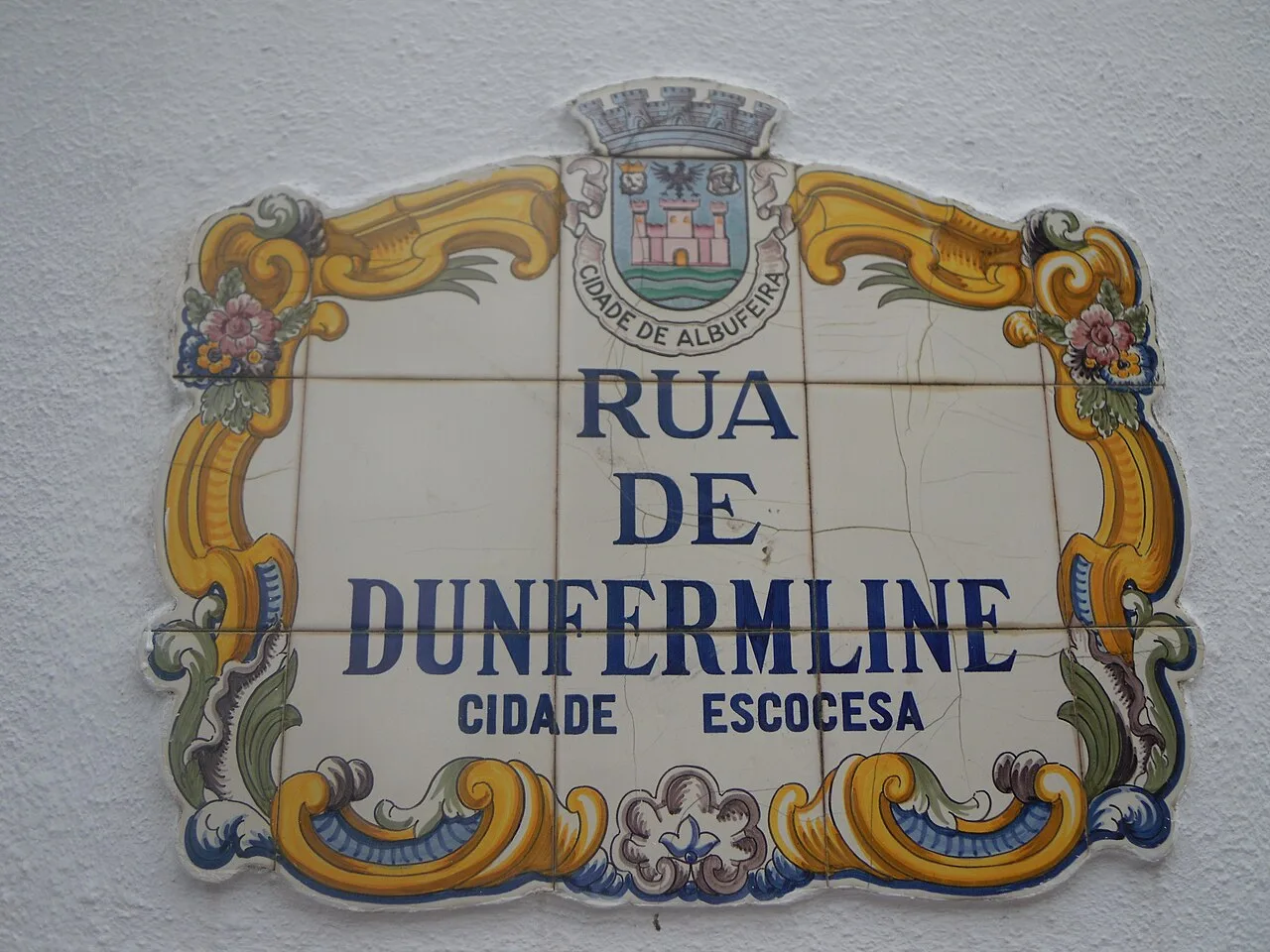
Colorful ceramic street sign with the name 'Rua de Dunfermline' in Portugal. Kolforn (Kolforn) I'd appreciate if you could mail me (Kolforn@gmail.com) if you want to use this picture out of the Wikimedia project scope. This file is licensed under the Creative Commons Attribution-Share Alike 4.0 International license. You are free: to share – to copy, distribute and transmit the work to remix – to adapt the work Under the following conditions: attribution – You must give appropriate credit, provide a link to the license, and indicate if changes were made. You may do so in any reasonable manner, but not in any way that suggests the licensor endorses you or your use. share alike – If you remix, transform, or build upon the material, you must distribute your contributions under the same or compatible license as the original.https://creativecommons.org/licenses/by-sa/4.0CC BY-SA 4.0 Creative Commons Attribution-Share Alike 4.0 truetrue, CC BY-SA 4.0

Dunfermline

Scotland

53,100Population
18,311,215 km²Area

Dunfermline is a city in Fife, Scotland, known for its rich history as a former capital of the Kingdom of Scotland. It features significant landmarks such as Dunfermline Abbey and a vibrant cultural scene.

02Geography

Dunfermline is situated on the coastal fringe of Fife, approximately 3 miles from the northern shore of the Firth of Forth. The town's elevation varies, with the medieval centre rising from about 51 metres to over 100 metres above sea level. The surrounding landscape includes the Cleish Hills to the north, contributing to its scenic views.

Distance to coast
3 miles
Average annual temperature
18 °C (max) to 9 °C (min)

03History

Dunfermline's history dates back to the Neolithic period, with significant development during the Bronze Age. The town became prominent in the 11th century when Malcolm III married Saint Margaret, leading to the establishment of Dunfermline Abbey, a royal mausoleum for Scottish monarchs.

Dunfermline, a historic city in Fife, Scotland, was once the capital of the Kingdom of Scotland and is home to notable landmarks and a rich cultural heritage.

04Economy

Historically, Dunfermline thrived on the linen industry from the 18th century, which was bolstered by its proximity to water sources for powering mills. Today, it serves as a major service centre with significant employment from companies such as Sky UK and Amazon.

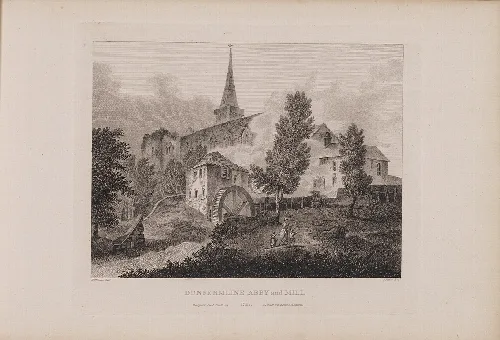
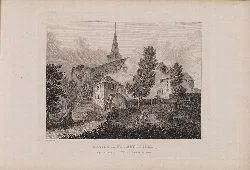
Drawing of Dunfermline Abbey, a church with a tall spire, and a watermill surrounded by trees.
A historic scene of Dunfermline Abbey and mill, with a church spire and watermill in a rural setting.
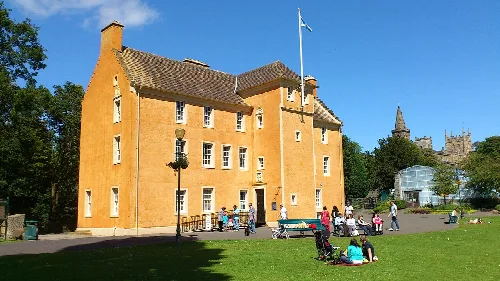
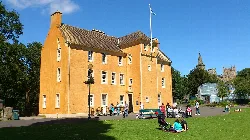
A yellow historic house with people sitting and walking nearby in a park.
Pittencrieff House in Dunfermline, recently restored to its original coloured render, with visitors enjoying the park.

05Landmarks and Notable Buildings

Dunfermline is home to several significant historical sites, including the Category A listed Dunfermline Abbey, which showcases Scoto-Norman architecture. Other notable structures include the Dunfermline War Memorial, Abbot House, and the Carnegie Library.

06Culture

Dunfermline hosts various cultural events and institutions, including the annual Bruce Festival in Pittencrieff Park, which celebrates local history. The Dunfermline Carnegie Library & Galleries offers a blend of museum, art gallery, and community spaces.

Dunfermline · Data
County
Fife
Nation
Scotland
Population
53,100
Area
18,311,215 km²
Website
http://www.dunfermline.info/
Coordinates
56.0714, -3.4617

Photos

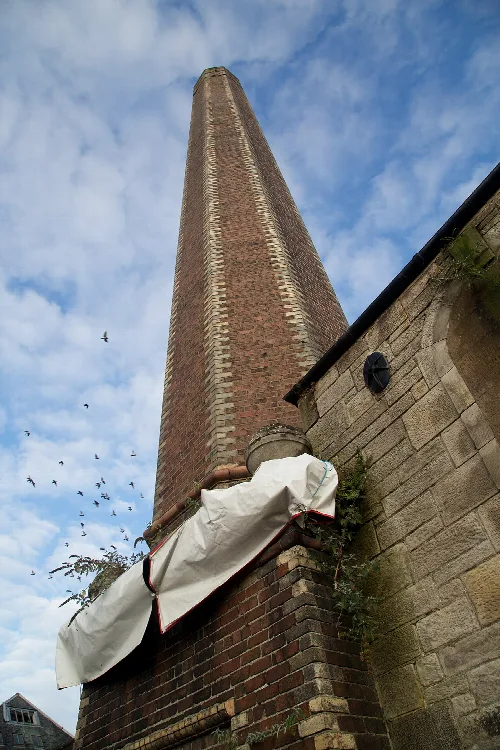
Tall brick chimney with covered base and cloudy sky.
A tall brick chimney stack in Dunfermline, Fife, with a partly covered base and a cloudy sky background.
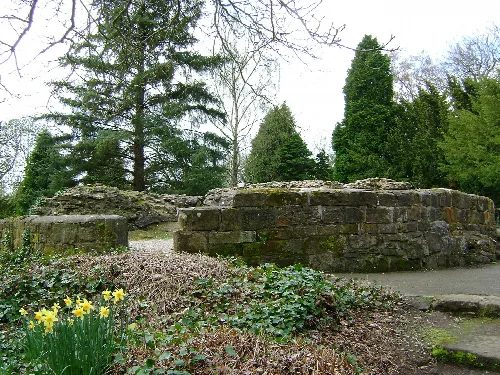
Stone ruins with trees and plants in a park setting.
Remains of Malcolm Canmore's Tower in Pittencrieff Park, Dunfermline, with stone walls and greenery.
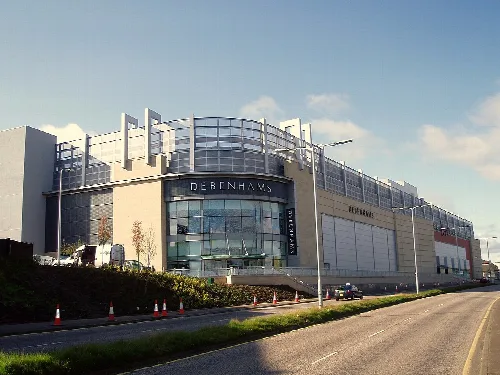
Modern shopping centre with glass facade and Debenhams sign.
Kingsgate Shopping Centre extension with Debenhams entrance in Dunfermline, Fife.
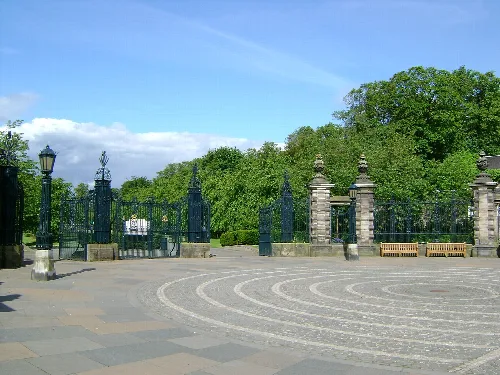
Gates and stone pillars at the entrance of Pittencrieff Park with trees in the background.
The Louise Carnegie Memorial Gates at Pittencrieff Park in Dunfermline, Fife, Scotland.
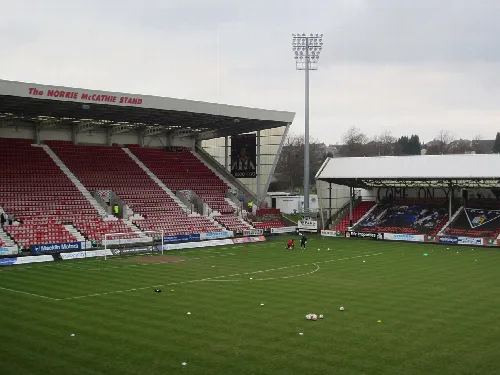
Football stadium with empty stands and a green pitch.
East End Park, home of Dunfermline Athletic F.C., with empty stands and a well-maintained pitch.

Frequently asked questions

Drawing of Dunfermline Abbey, a church with a tall spire, and a watermill surrounded by trees.

What can I see at Dunfermline Abbey?

Dunfermline Abbey, built between 1128 and 1150, is a prime example of Scoto-Norman architecture. It was originally a church founded by Queen Margaret and evolved into a royal mausoleum, housing the remains of eighteen royals, including Robert the Bruce. Visitors can explore substantial remains despite destruction during the Wars of Scottish Independence, including parts of the dormitory and latrine blocks dating back to the early 13th century.

Sights Dunfermline Abbey
A yellow historic house with people sitting and walking nearby in a park.

What is the history behind Pittencrieff House?

Pittencrieff House, built around 1610, was designed as a centrepiece of Pittencrieff Park. It underwent restoration by Sir Robert Lorimer between 1911 and 1913, converting some bedrooms into galleries for exhibitions. The recent restoration completed in 2010 restored its original ochre-coloured limewash exterior, funded by a £1.7 million conservation scheme.

History Pittencrieff House

What are some notable events in Dunfermline's history?

Dunfermline was the de facto capital of Scotland from the 11th to the 15th centuries, with significant events including the marriage of Malcolm III and Saint Margaret. The town's ecclesiastical importance waned after the Reformation in 1560, but it regained prominence with the establishment of the linen industry in the 18th century, leading to economic growth.

History For residents

What is the significance of the Dunfermline War Memorial?

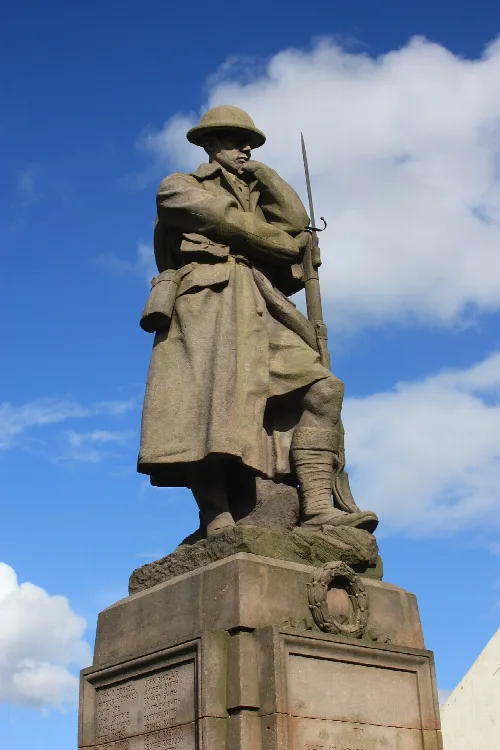
The Dunfermline War Memorial, unveiled in 1925, commemorates those who died in the First and Second World Wars. It lists 632 names from the First World War and 275 from the Second. A garden of remembrance was added in 1958, enhancing its role as a site of reflection for the community.

Sights Dunfermline War Memorial

A yellow historic house with people sitting and walking nearby in a park.

Are there any parks or nature spots in Dunfermline?

Yes, Dunfermline features Pittencrieff Park, a major public park that offers beautiful landscapes and recreational areas. It is home to Pittencrieff House and provides a space for events and community activities, making it a popular spot for both residents and visitors to enjoy nature and leisure.

Nature Pittencrieff Park For residents

What industries are prominent in Dunfermline today?

Dunfermline has a diverse economy, with significant employment in wholesale and retail, health and social work, and information technology. Major employers include Amazon, Sky UK, and TechnipFMC. The town has also developed a strong retail sector, making it a key shopping destination in West Fife.

Living there For residents

What is the story behind the name 'Dunfermline'?

The name 'Dunfermline' is believed to derive from Gaelic, where 'dun' means a fortified hill, likely referring to a rocky outcrop at Malcolm Canmore's Tower. The second part, 'ferm', may refer to a historical name for the Tower Burn, indicating a site of fortification between two watercourses.

History For residents

What are some local dishes or food specialities in Dunfermline?

Dunfermline offers a variety of local dishes, reflecting traditional Scottish cuisine. Visitors can enjoy haggis, neeps and tatties, as well as fresh seafood from the nearby Firth of Forth. Local restaurants often incorporate seasonal ingredients, providing a taste of the region's culinary heritage.

Food & drink

What is the significance of the Carnegie Library in Dunfermline?

The Dunfermline Carnegie Library, built between 1881 and 1883, was the first public library funded by Andrew Carnegie, a local philanthropist. It represents his commitment to education and community service, and it played a vital role in promoting literacy and learning in the area.

Sights Dunfermline Carnegie Library

What can you tell me about the local events in Dunfermline?

Dunfermline hosts various local events throughout the year, including festivals celebrating its rich history and culture. Community events often take place in Pittencrieff Park, and there are seasonal activities that engage residents and visitors alike, fostering a strong community spirit.

Festivals & events For residents
Map

Nearby

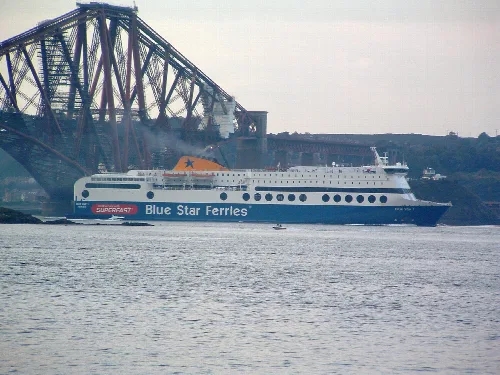
Ferry Blue Star 1 passing under the Forth Bridge.
Rosyth
Fife · 13,780 inhabitants
Kelty war memorial
Kelty
Fife · 6,730 inhabitants

Own text, written with AI assistance from the facts in Wikipedia · Dunfermline · Data: Wikidata Q211950 · Photos: Wikimedia Commons, see individual licenses. · CC BY-SA 4.0