Shepton Mallet is a market town located in Somerset, England, known for its rich history and proximity to the Mendip Hills. The town features a blend of historical architecture, including a medieval parish church and remnants of its Roman past, alongside a vibrant cider production industry.
02Geography
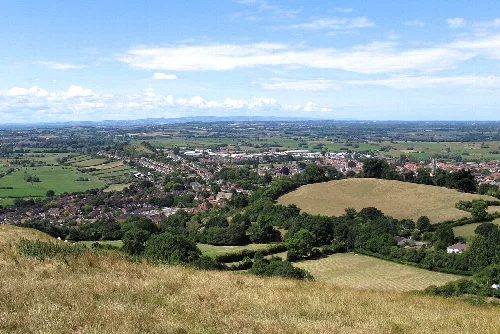
Situated in the southern foothills of the Mendip Hills, Shepton Mallet is characterised by its varied geology, including Forest Marble, Blue Lias, and Oolitic limestone. The River Sheppey flows through the town, creating a narrow valley that occasionally experiences flooding.
Nearby caves
Thrupe Lane Swallet, St. Dunstan's Well Catchment
Natural reserves
Friar's Oven SSSI, Windsor Hill Quarry SSSI
03History
Shepton Mallet has a rich historical tapestry, with evidence of prehistoric, Roman, Saxon, and Norman settlements. The town's name, derived from Old English, reflects its agricultural roots, while its medieval wool trade transitioned into brewing and cider production.
Domesday Book Records a settlement known as Sceaptun in 1086.
Market charters Granted in 1235, revoked in 1260 and 1318.
Shepton Mallet Prison Closed in March 2013, was England's oldest prison.
Black Death Struck in 1348, reducing the population significantly.
Civil War Town supported Parliament; experienced a bloodless confrontation in 1642.
Shepton Mallet is a historic market town in Somerset, England, known for its architecture and cider production.
04Economy
Historically reliant on wool and cloth production, Shepton Mallet's economy has evolved, with brewing and cider production becoming significant industries. Despite recent economic challenges, the town has seen growth in sectors like distribution and public services.
Major industries Cider production, brewing, and retail.
Market activity Friday market has seen a decline in stallholder numbers.
Retail developments New shopping centre opened in 2006-2007.
Employment sectors Distribution, business services, health, and education.
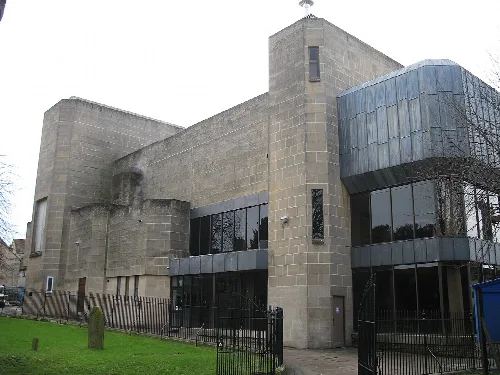
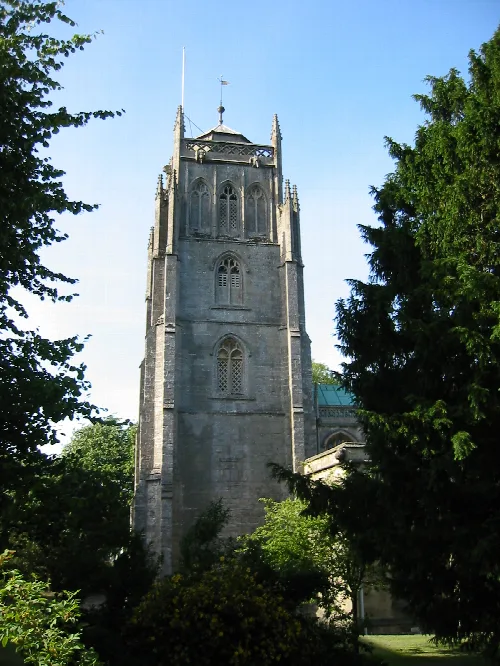
The Academy in Shepton Mallet, a modern building with a mix of stone and glass facades.West tower of SS Peter and Paul parish church in Shepton Mallet, Somerset, seen from the south amidst greenery.
05Culture
Shepton Mallet hosts various cultural events, including the annual Collett Day and a carnival in November. The town is also known for its proximity to the Glastonbury Festival and has a history of artistic endeavours.
Collett Day Annual town fete held in June.
Shepton Mallet Digital Arts Festival Founded in 2009.
Carnival Features illuminated carts and takes place in November.
Local media Shepton Mallet Journal, Shepton Gazette.
Historical events Bath Festival of Blues held in 1970.
06Landmarks
The town is home to numerous historical landmarks, including the Grade I listed parish church of St Peter and St Paul and the iconic market cross. Other notable structures include the former prison and various historic houses.
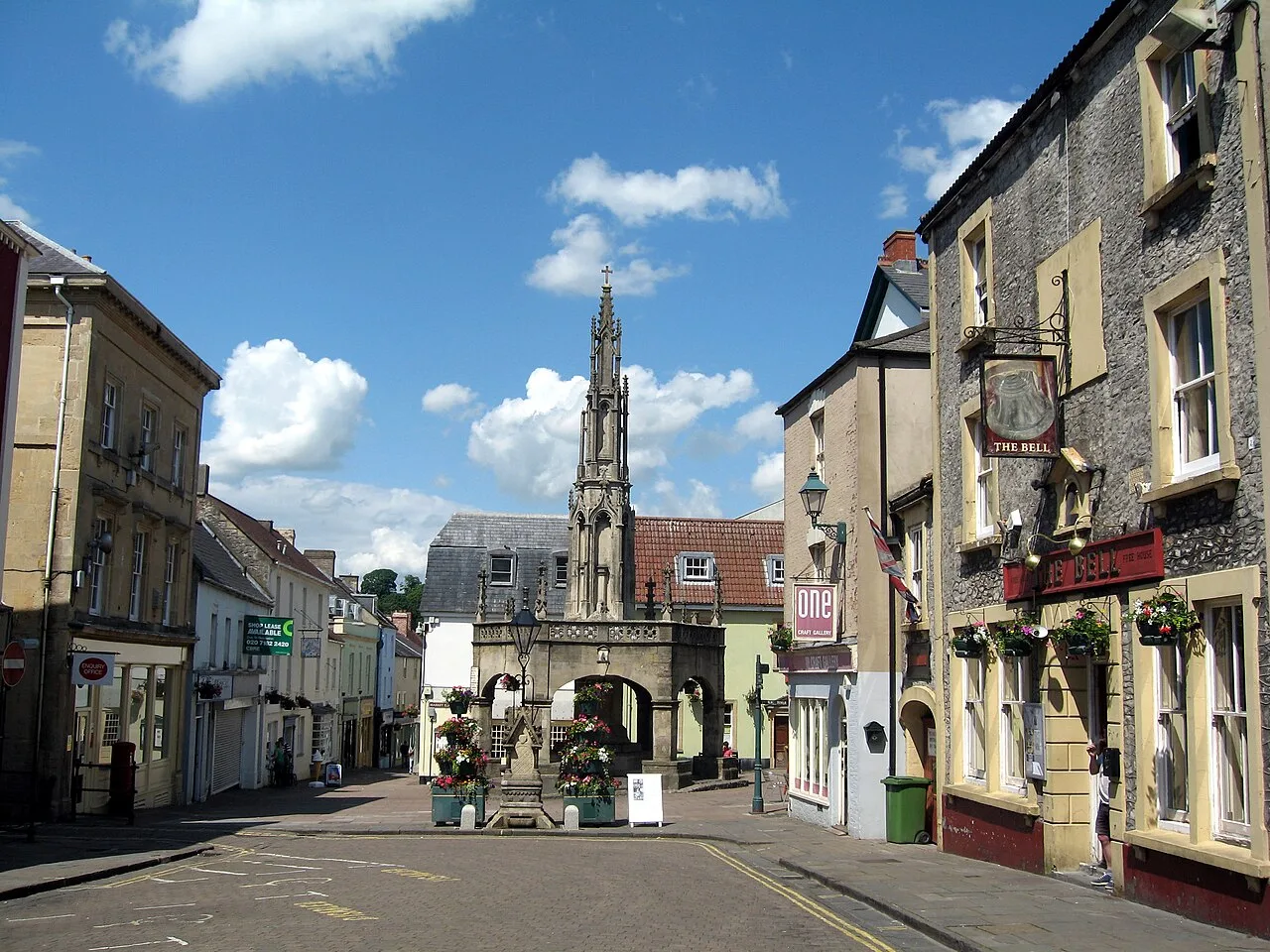
Market cross Hexagonal structure dating from 1520.
St Peter and St Paul Church Features a notable 15th-century oak wagon roof.
Anglo-Bavarian Brewery Established in 1864, known for lager production.
Charlton Viaduct A historic railway viaduct with 27 arches.
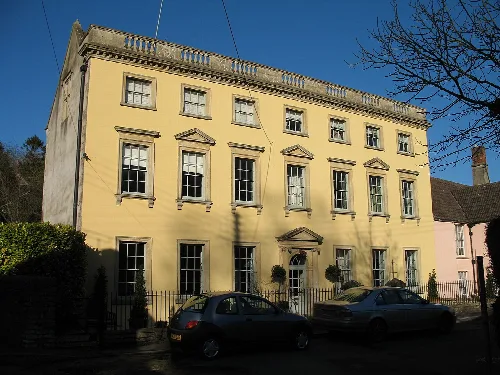
Bowlish House Palladian style house dating from 1732.
07Transport
Shepton Mallet is well-connected by road, with the A37 running through the town. Although it once had railway stations, these are now closed, with the nearest active rail services located several miles away.
Road connections A37, A361, A371 provide access to nearby towns.
Closed railway stations Shepton Mallet (High Street) and (Charlton Road) closed in the 1960s.
Nearest railway station Castle Cary, 8 miles south.
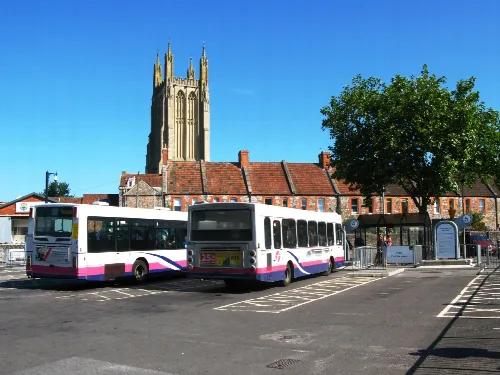
Bus services Provided by First West of England and Berrys Coaches.
Proposals for rail restoration Endorsed by Mendip District Council.
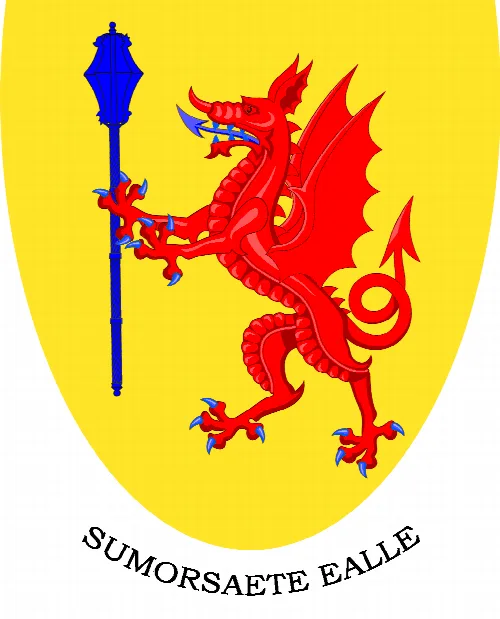
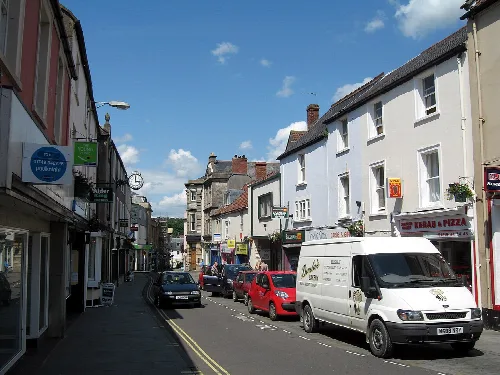
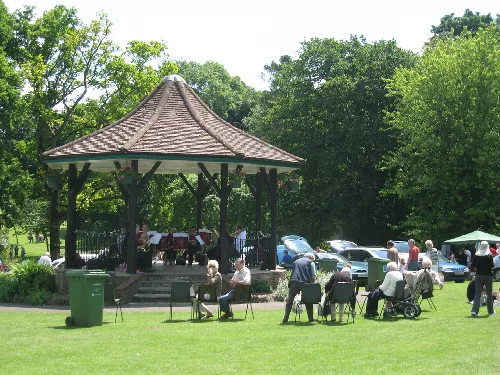
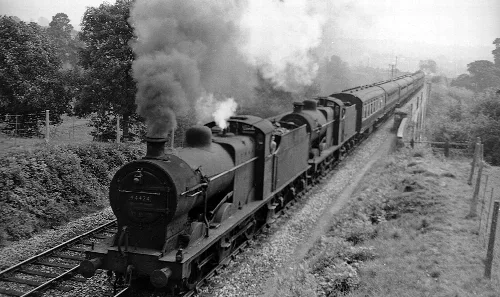
The Shepton Mallet coat of arms features a red dragon holding a blue mace on a yellow shield.Shepton Mallet High Street features shops, parked cars, and a bright blue sky, reflecting the town's lively retail area.The bandstand in Collett Park during Collett Day in Shepton Mallet, Somerset, with the Whitstone Community Band performing.Steam train with LMS 4F 0-6-0 locomotives heading SE towards Shepton Mallet on the Somerset & Dorset line.Old Bowlish House, a historic building in Bowlish, Shepton Mallet, Somerset, with a yellow facade and classical architectural details.
Frequently asked questions
What can you tell me about the market in Shepton Mallet?
The market in Shepton Mallet is located in a car-free marketplace, featuring a market cross and preserved butcher's stalls. It serves as a central hub for local commerce and community gatherings, reflecting the town's historical significance as a market town. The vibrant atmosphere is enhanced by the surrounding shops and cafes, making it a popular spot for both residents and visitors.
What is the history behind the SS Peter and Paul parish church?
The parish church of SS Peter and Paul in Shepton Mallet features some Saxon stonework, indicating its historical significance. A charter from 706 records that the area was passed to Abbot Berwald of Glastonbury Abbey. The church has been a focal point in the community for centuries, showcasing architectural styles from different periods, including medieval elements.
What is the significance of the Shepton Mallet coat of arms?
The Shepton Mallet coat of arms features a red dragon holding a blue mace on a yellow shield. This emblem reflects the town's heritage and identity, symbolising strength and resilience. The design is rooted in local history and adds to the town's unique character, often seen in various civic contexts and local events.
Is there any evidence of prehistoric activity in Shepton Mallet?
Yes, archaeological investigations in Shepton Mallet have uncovered evidence of prehistoric activity, including Neolithic flint and pottery fragments. Additionally, Bronze Age burial sites and Iron Age roundhouses have been found, indicating a long history of human settlement in the area, dating back thousands of years.
What are the main industries in Shepton Mallet today?
Currently, Shepton Mallet's economy is shifting towards distribution, business services, public administration, health, education, quarrying, and construction. Although the traditional manufacturing sector has declined, the town remains a centre for cider production, continuing its historical legacy in this industry.
What outdoor activities are available near Shepton Mallet?
Shepton Mallet is surrounded by beautiful countryside, including the Mendip Hills, which offer opportunities for hiking and exploring nature. The East Mendip Way long-distance path runs around the northern edge of the town, providing scenic views and access to various outdoor activities such as walking and cycling.
Shepton Mallet is close to the Glastonbury Festival, one of the UK's most famous music festivals, attracting visitors from around the world. Additionally, the town hosts various local events throughout the year, celebrating its heritage and community spirit, often centred around the marketplace.
Shepton Mallet has a temperate climate that is wetter and milder than much of England. The average annual temperature is around 10 °C, with January being the coldest month. Summers are warm, with July and August seeing mean daily maxima around 21 °C, and rainfall is typically highest during the winter months.
How has Shepton Mallet's population changed over time?
Shepton Mallet's population has fluctuated over the centuries, with a stable count through the 19th century and a notable increase to 10,592 by the 2021 census. Economic changes and local developments have influenced these demographic shifts, reflecting the town's evolving character and community.
What are the main transport links in Shepton Mallet?
Shepton Mallet is well-connected by road, notably via the A37, which links it to nearby towns such as Bath and Bristol. While there is no railway station in the town, public transport services provide access to surrounding areas, making it relatively easy to travel to and from Shepton Mallet.